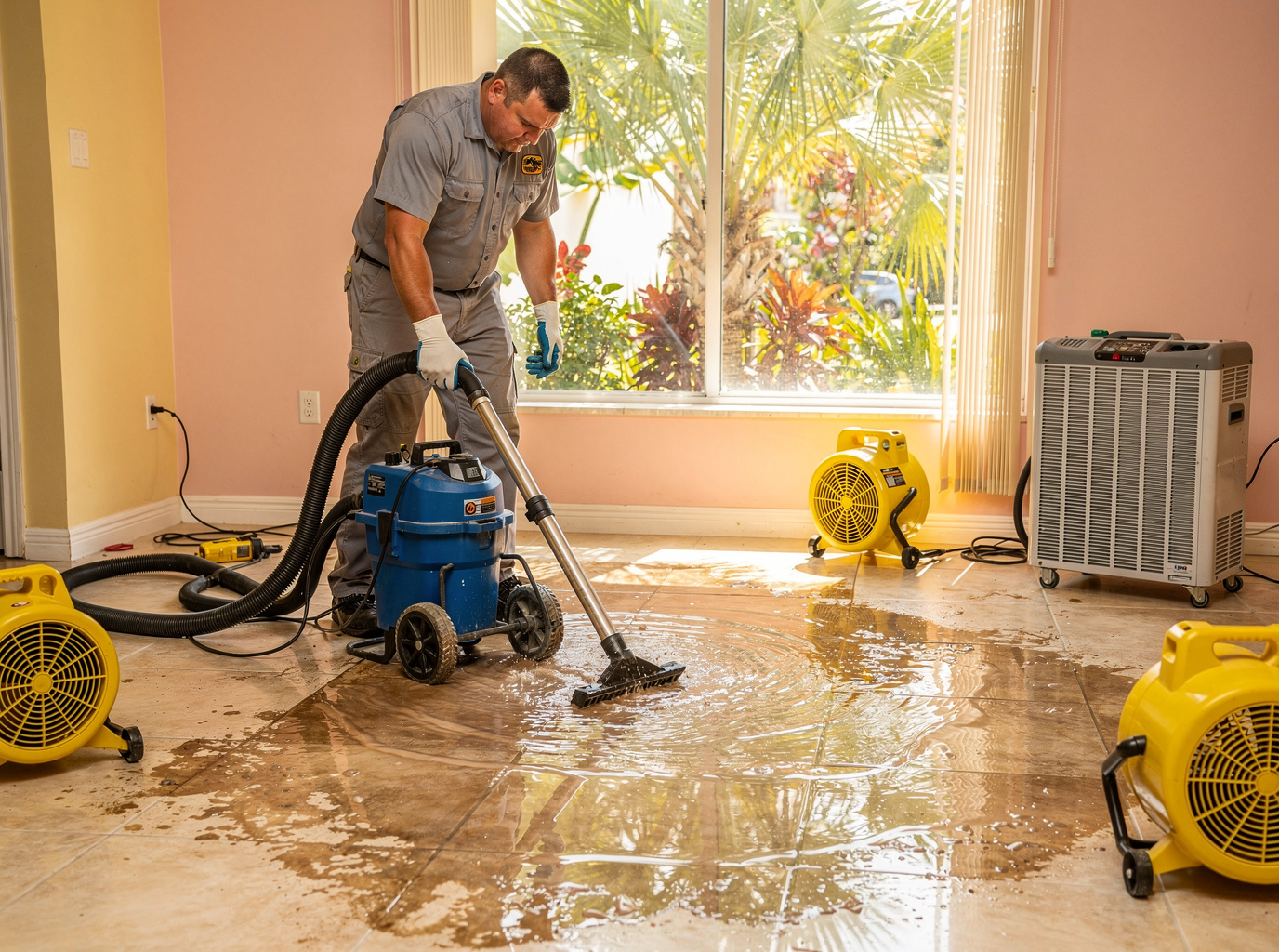
Hialeah Water Damage Restoration pros reach Fort Lauderdale homes quickly via I-95 or US 1. Older single-family houses east of Federal Highway often sit on fill lots with shallow drainage, so standing water after a summer downpour can reach slab edges fast. Our crew at 103 W 38th St responds during posted hours to extract water before it migrates into the original wood subfloors common in the 1950s and 1960s stock around Rio Vista and Sunrise Intracoastal.
Tropical monsoon rains hit Fort Lauderdale harder than inland Miami-Dade pockets because of the flat coastal plain and canal system. When the New River backs up, moisture travels under raised homes on NE 7th Avenue and similar streets. We set containment lines early, pull moisture from the limestone base, and dry the space so mold does not take hold in the humid air that lingers after storms.
Access to many Fort Lauderdale blocks is tight because of narrow driveways and canal-front lots. Our trucks carry portable equipment sized for these conditions so we can work without blocking Las Olas traffic or the Riverwalk path while we handle water damage repair.
Around Fort Lauderdale
We regularly work near:
- 📍Fort Lauderdale Beach
- 📍Las Olas Boulevard
- 📍Hugh Taylor Birch State Park
- 📍Stranahan House
- 📍Riverwalk Fort Lauderdale
- 📍Broward Center for the Performing Arts
Water Damage Restoration in Fort Lauderdale — Local Notes
- •Fort Lauderdale lots near the Intracoastal often have high water tables; we stage pumps on the street side to avoid neighbor complaints.
- •1950s-1960s concrete-block homes on NE 15th Street and adjacent blocks have original terrazzo that hides moisture; infrared scans locate it before removal.
- •Summer monsoon cells dump rain faster than the storm drains on A1A can handle, pushing water into low garages along Fort Lauderdale Beach.
- •Canal-front properties require permits from the city before any discharge; we coordinate with local inspectors same day.