2026-11-12 · Roberto Mendez
Key Cost Factors for Water Damage Restoration in Hialeah
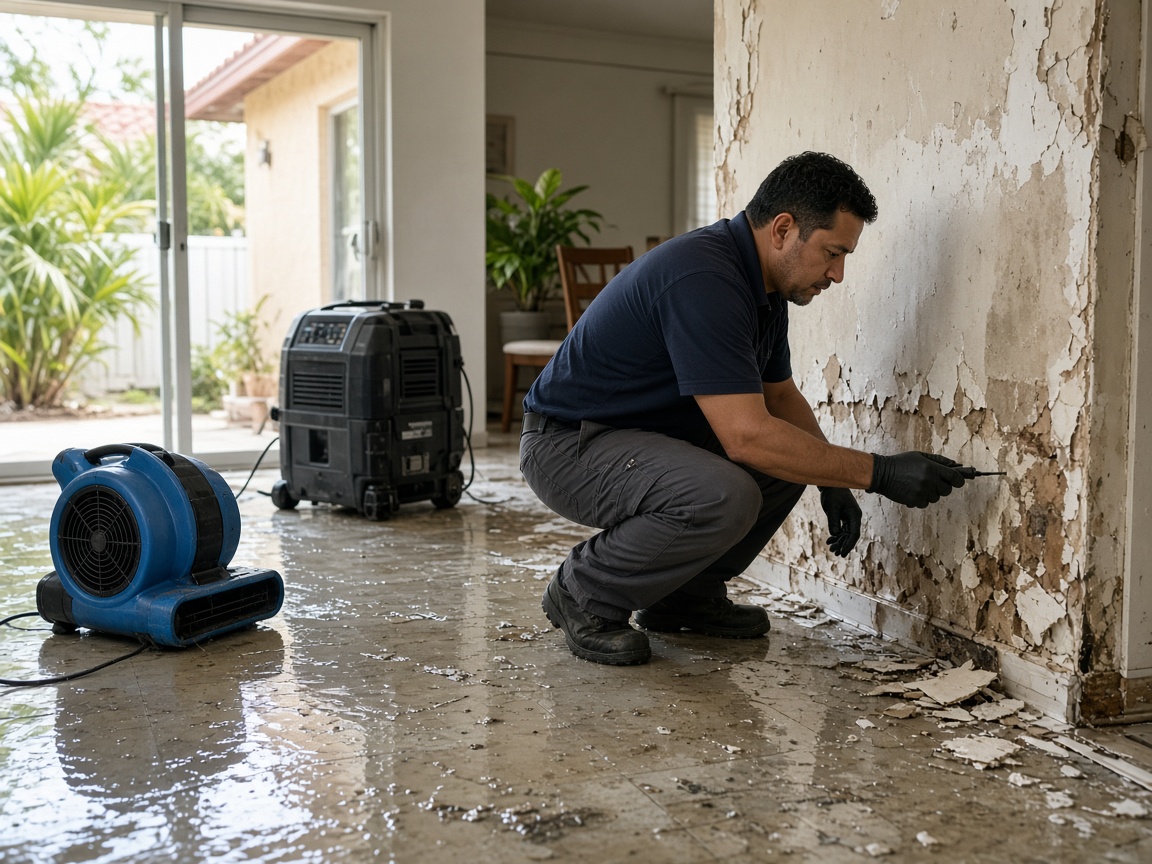
Water damage restoration costs in Hialeah hinge primarily on the category of water, the square footage involved, and how quickly extraction begins, with projects in older Downtown Hialeah homes often running higher due to plaster and lath walls that retain moisture longer than modern drywall.
Extent of Affected Area and Structural Access
Larger affected zones drive up costs because technicians must extract standing water, remove saturated materials, and set up drying equipment across more space. In single-story concrete block homes common throughout Hialeah Gardens and Palm Springs North, water that reaches under tile or into slab edges requires specialized moisture meters and sometimes concrete drilling to confirm dryness. Multi-story properties near Amelia Earhart Park add vertical access challenges, increasing labor hours when ceilings on the second floor become saturated from roof leaks. Technicians track moisture at multiple depths in walls and floors, and hidden pockets behind cabinets or under built-in shelving extend the timeline. Every additional 100 square feet of affected flooring or wall surface raises equipment runtime and monitoring visits, directly affecting the total.
Category of Water and Contamination Level
Clean water from a burst supply line costs less to handle than gray or black water because it requires fewer containment steps and less personal protective equipment. Storm-related flooding in Miami-Dade County during the hot wet summers often introduces silt and organic debris that turns the loss into category three water, requiring full removal of porous materials and antimicrobial treatments. Properties near Hialeah Park Race Track that sit lower than surrounding streets see more sediment-laden water after heavy rains, which lengthens the cleaning phase. Homeowners in these situations must budget for additional disposal fees for contaminated drywall and carpet padding that cannot be salvaged.
Local Climate Impact on Drying Times
Hialeah's tropical monsoon climate with frequent afternoon thunderstorms and high humidity slows evaporation rates, so dehumidifiers and air movers must run longer than in drier regions. This extended equipment time appears on every invoice as daily rental charges. The linked article How Humidity Slows Drying After Water Damage in Hialeah explains how 80-plus percent relative humidity common from June through October forces crews to use more aggressive moisture control methods. Homes in Miami Lakes that back up to canals face additional groundwater seepage that re-wets slabs during the wet season, requiring repeated visits.
Material Types and Replacement Needs
Older plaster walls found in many Downtown Hialeah residences absorb water differently than modern drywall, often needing full removal rather than simple drying. Hardwood floors installed before the 1980s in neighborhoods around 103 W 38th St frequently cup or buckle, leading to complete replacement instead of refinishing. Tile over concrete slabs common in Hialeah Gardens requires breaking out sections to dry the subfloor, then matching new tile that may no longer be manufactured. Each of these material decisions adds line items for demolition, disposal, and new product installation that vary by home age and original construction quality.
Timing and Emergency Response Factors
Calling for water damage restoration within the first few hours limits secondary damage such as mold growth and warped subfloors, keeping overall costs lower. Evening or weekend calls in the Hialeah area may require after-hours mobilization from the team based at 103 W 38th St, Hialeah, FL 33012, which adds a response premium. Quick action also reduces the volume of materials that must be replaced rather than dried. Residents who delay until visible staining appears on ceilings near Amelia Earhart Park usually face larger invoices because mold remediation becomes necessary in addition to drying.
Understanding these variables helps Hialeah homeowners anticipate realistic ranges before work begins. Contact the team during business hours Monday through Friday 8am to 6pm or Saturday 9am to 2pm to schedule an on-site assessment that accounts for the specific conditions of your property.